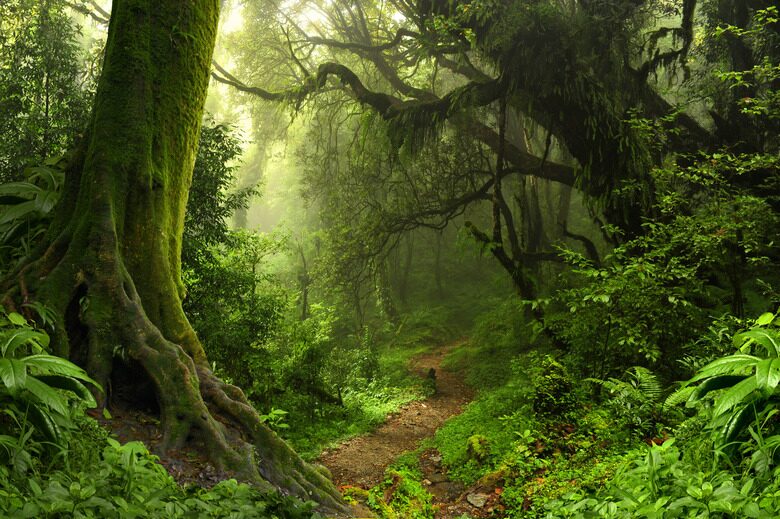
Spending time in forests for peace and quiet, often called forest bathing, might sound like a wellness trend. But scientists say the health benefits are real.
According to the Department of Environmental Conservation of New York, trees and plants release natural chemicals called phytoncides to protect themselves from insects and bacteria. By happenstance, these same phytoncides, which fill the forest air, also cause human circulation systems to produce more specialized white blood cells called NK cells. NK cells are essential to the immune system and can even prevent and combat cancers. It’s no joke. A series of extensive studies in Japan proved it. But phytoncides are not the only benefit of the woodlands. The intensity of modern life, constant media, notifications, and social pressure leaves many people anxious and stressed. Time in the forest can counteract that stress. The forest is real. The forest is peaceful. It helps people feel grounded, pulling attention away from worries and back to the present moment. Stress is well known to be harmful and can contribute to many serious illnesses, including heart disease. Furthermore, as Dr. Snyder relates, stress can lead to insomnia, brain fog, trouble concentrating, and possibly mental disorders, such as GAD (generalized anxiety disorder), if left unchecked. So it is vitally important that we learn to cope with it, and forests can help. Additionally, according to UCLA Health, the same break from the hyperactivity of modern life also allows people to attain greater focus. Studies have even shown that forests can decrease the effects of ADHD.
Clearly, forests enhance physical health and mental well-being. It’s almost as if, thousands of years ago, humans were forest creatures. But now that many people live in dense urban cities, for some, spending time in forests isn’t all that feasible. Fortunately, according to the National Library of Medicine, city parks and trees give many of the same benefits as natural forests. Even spending time around trees infrequently can help, as benefits can last from a week up to a month.
Even with growing research, scientists say we are only beginning to understand how deeply nature affects human health. What we understand today is only the tip of the iceberg; there is much more to come. As time goes by the true gifts of the woodlands will come to light and their impact will be more meaningful in our lives.
Perhaps it’s cruel irony, then, that as the benefits of nature are finally being proven industrialization is beginning to take its toll on the environment. As forests disappear due to development and climate change, scientists warn we may be losing benefits we don’t yet fully understand. What might global warming caused by two hundred years of unhindered burning of fossil fuels mean for our precious forests? Studies have shown that loss of trees in an area is followed by a substantial increase in death rates in that area. Forests are important to us in more ways than we know. So maybe forest bathing and the benefits accompanying it aren’t just any other trend after all. Maybe they’re yet another call to preserve the wonders of our wilderness.
Sources:
- https://pmc.ncbi.nlm.nih.gov/articles/PMC9665958/
- https://dec.ny.gov/nature/forests-trees/immerse-yourself-for-better-health
- https://www.uclahealth.org/news/article/7-health-benefits-spending-time-nature
- Personal interview with Dr. Amy Snyder, clinical psychologist.