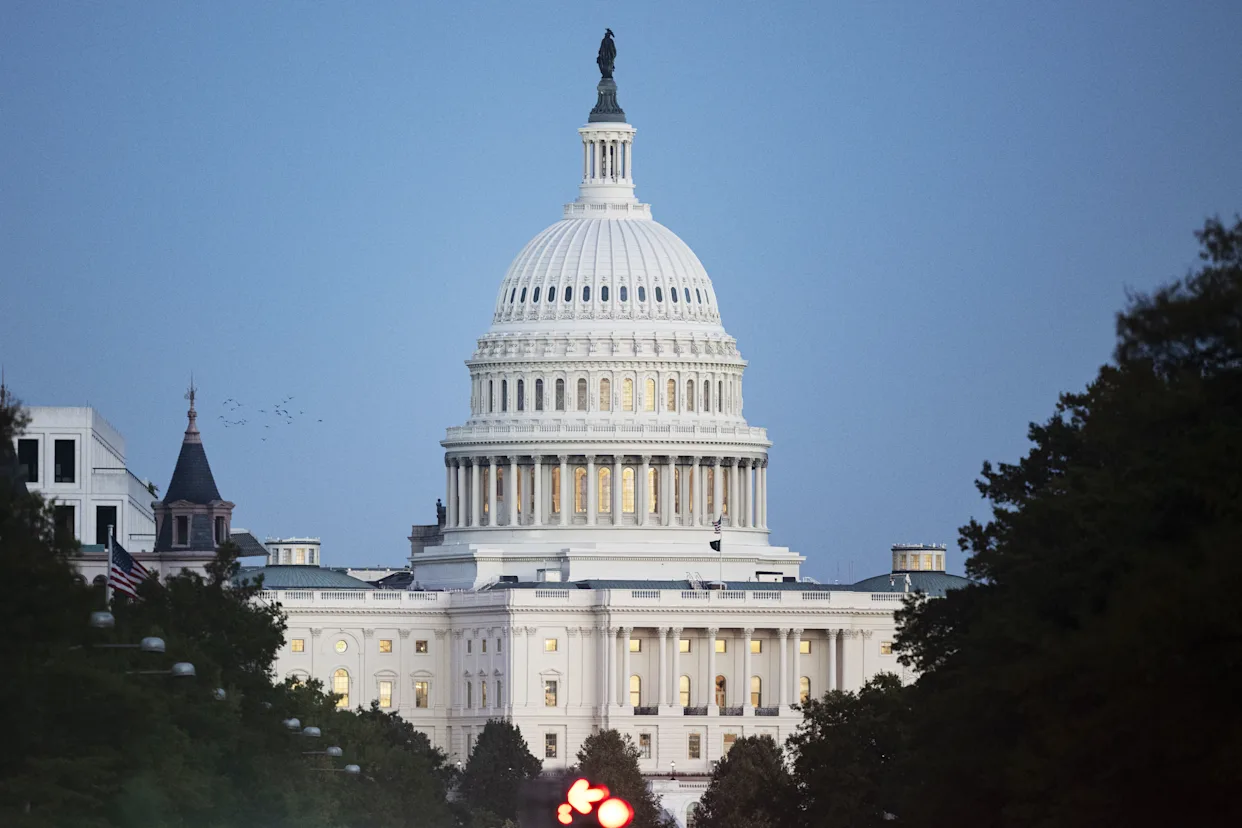
Recently, you might have seen in the news, that the government shutdown, but nothing in your day to day life changed. So,what does this shutdown mean? USAfacts defines the government shutdown as, “Congress [failing] to pass or the president refuses to sign a spending bill to fund the federal government’s operations. This results in a funding gap that can cause several government functions to be temporarily disrupted” (USAfacts Team). The effects are seen affecting everyday people through the delays in government services, problems in national parks, and the impact on the economy. While the shutdown may not seem to affect your everyday life, it definitely impacted the government.
While this may seem new and scary, it has actually occurred many times before. Since 1976, there have been over 20 shutdowns under both Republican and Democratic presidents, some lasting just a day and others, like in 2019, stretching over a month. You can view the full list on USA Today’s website (linked at the end of the article). Although many point fingers and blame specific political parties for government shutdowns, it is important to keep a clear, unbiased opinion when looking at the facts. There has never been any indication that a specific political party is more likely to have the government go into a shutdown based on their values. Instead, it is dependent on lawmakers’ ability to resolve a budget deadlock before the deadline.
Since it is a government shutdown, it takes a significant toll on government funded programs. There are three main groups that suffer the consequences, those are discretionary programs, mandatory programs, and federal employees. For discretionary programs, no new funding is available unless faced with an exception. Similarly, there is also no new funding for mandatory programs; however, select programs already received money from the Full-Year Continuing Appropriations and Extensions Act, giving them a slight advantage. Additionally, mandatory programs that are not subjected to the annual appropriation process (laws passed to authorize spending) will continue to receive funding, as they are essential to the prosperity of the United States. Finally, federal employees take the biggest hit, financially, between the three groups. Federal employees get split into three groups as well, “those whose salaries are financed through means other than annual appropriations and so continue to work and be paid; those who are furloughed; and those who continue to work without pay, also known as “excepted” employees” (ourpublicservice.org). The government shutdown takes a large toll on hardworking people.
Despite you maybe not feeling the effects directly, there are actually a lot of things taking place that will affect you. For example, air travel, specifically TSA, is heavily impacted by the shutdown, and if you were to go to their airport, this would clearly be seen. Even though it technically still runs as it normally would, there is a shortage in workers due to them not being paid. This means that if you were to travel while the shutdown is still happening, it is recommended that you budget more time for getting through security, as lines can be very long. Furthermore, passports and visas have also been delayed. Their processing time has also lengthened and now can take longer than the allotted six to four weeks. It is important to be patient when dealing with government funded agencies at the moment, as they are understaffed, underpaid, and swamped.
Additionally, public attractions are also being greatly affected by the shutdown, such as national parks. While the parks are remaining open, there are less workers there to maintain it and to provide amenities to people visiting. This not only affects people visiting, but also the state of the park and the wildlife. Without the proper upkeep, it is possible for poor, human made environmental factors to impact the plants and animals. Furthermore, this can affect the economy of certain states and areas, as it impacts tourism. Many people go to different states in the hopes of experiencing the beautiful parks up close, but without the workers who help to keep them clean, more and more people will not want to go. This makes it even more difficult for the government to have enough money to pass the bill to end the shutdown.
It is important to note that a government shutdown can end relatively quickly when Congress and the President get involved. To end the shutdown, the government must reinstate what they failed to do before the deadline. They must pass appropriation bills to fund federal departments and agencies. This will give the government the access they need to funds, which will go to social security, medicare, national parks, air travel, environmental and food inspection, etc. Currently, it is a waiting game, as there is nothing that we, as citizens of the United States, can do. It is a job that is left up to the government to resolve, and still is very important to be informed on these topics and their impact.